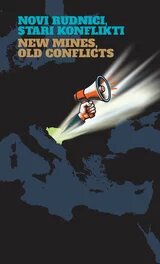
The latest publication by the Heinrich Böll Foundation, Sarajevo Office, maps eight key cases of socio-ecological conflicts linked to extractive industry projects in BiH—from Majevica to Kupres and Ozren.
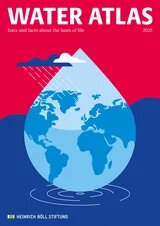
The English edition of the Water Atlas, published by Heinrich-Böll-Stiftung, presents the complexity and urgency of global water issues in a visually compelling, accessible format. It provides facts, trends, case studies, and political context to inform public discourse and shape policy. From the unequal distribution of water and industrial pollution to climate-linked water insecurity and geopolitical tensions, the Atlas aims to sharpen understanding and support action toward more sustainable and equitable water governance.
On the eve of the 30th anniversary of the genocide in Srebrenica, the Western Balkans Strategy Group, working under the auspices of the Heinrich Böll Stiftung, calls on all governments of the Western Balkans to ensure appropriate commemoration of the victims of the genocide and to fully implement the United Nations General Assembly Resolution adopted on 23 May 2024.
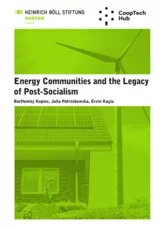
The energy and climate crisis is real, and the big fossil fuel companies are dictating the rules of the game. Global warming and Russia's aggression in Ukraine have accelerated the search for safer, cheaper, and greener energy. One option is energy provided by energy communities. In post-communist countries, however, cooperatives have a distinctly negative connotation. The belief that energy should come from big government agencies or fossil fuel companies has created a perception that energy prices are beyond our control. But is this statement true? We explore this and many other questions in the following report.
The Western Balkans Strategy Group, working under the auspices of the Heinrich Boll Stiftung, expresses grave concern over the call from the pro-Putin and pro-Vučić coalition Za budućnost Crne Gore (ZBCG), which is part of Montenegro’s government and parliamentary majority, for the urgent introduction of a law targeting so-called "foreign agents" in Montenegro. This development raises significant alarm about the future of civil society and democratic freedoms in the country.
This election cycle could either invigorate the enlargement process or introduce new challenges, making it imperative to explore the possible impacts and strategic responses for the WB in this evolving context.
The 2024 presidential and parliamentary elections in North Macedonia occurred amidst increased Euroscepticism due to unmet high expectations for progress towards EU membership and failed promises to deliver justice and the rule of law in the country.
The Western Balkans Strategy Group, working under the auspices of the Heinrich Boll Stiftung, is urging governments of the Western Balkans, particularly Serbia and Montenegro, to actively support the UN Resolution on Srebrenica. These countries are the only ones in the region that have not co-sponsored the resolution, which aims to memorialize the genocide in Srebrenica.