

Notes from a Study Visit
In early July, a group of political representatives, journalists, civil society representatives and researchers brought together by the Heinrich Böll Foundation travelled across Bosnia and Herzegovina, guided by a single question: what does mining mean today for the people and communities where the extraction of so-called critical mineral raw materials is planned or already under way?

Organised by the Heinrich Böll Foundation, the study visit entitled Mining in Bosnia and Herzegovina – Critical Raw Materials: Interests, Local Communities and Impacts brought together participants from European organisations, independent media outlets and the European Parliament for three days of field-based learning and discussions with local communities, municipalities, experts, environmental defenders and activists.
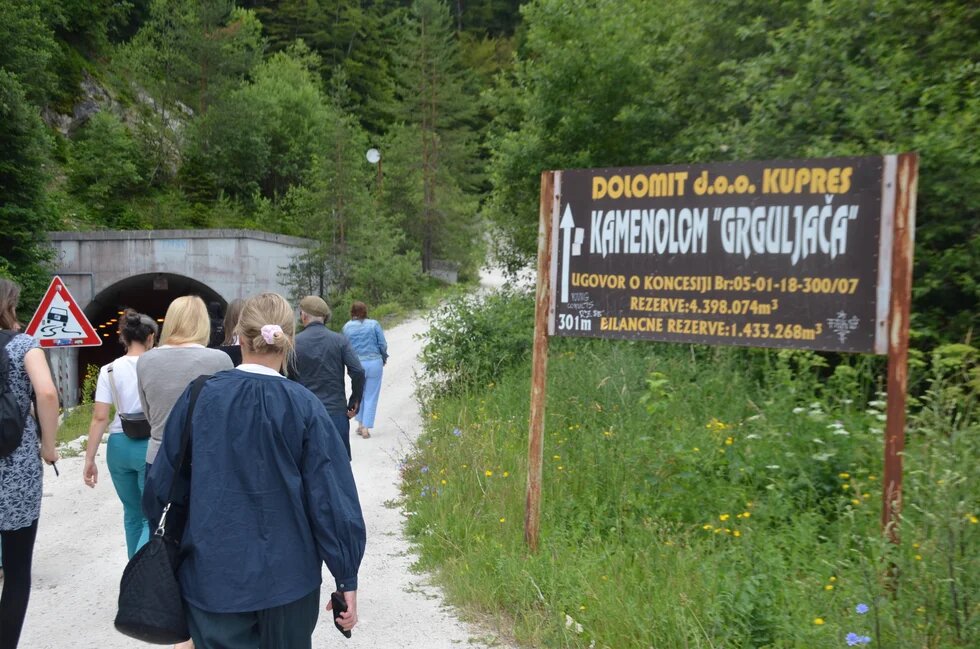
The journey began in Sarajevo and continued through Kupres, the Pliva Valley (Jezero and Šipovo), Banja Luka, Ozren, Majevica, Tuzla and Olovo to Vareš. The route encompassed some of the most pressing hotspots of socio-environmental conflict in Bosnia and Herzegovina, where debates surrounding the extraction of lithium, magnesium, nickel, cobalt, zinc, silver and gold are increasingly shaping not only the future but also the survival and everyday lives of local communities.
One striking moment during the visit occurred at the springs of the River Pliva, where the participants filled their bottles with water from one of the cleanest springs in Bosnia and Herzegovina. Only moments later, they listened to local activists express their concerns about exploratory works for a proposed mine in the municipality of Jezero and the potential consequences for the entire river basin.
The concerns voiced by residents were very similar in all the communities visited. One of the greatest problems they identified was the lack of transparency from the very outset, when the projects were first announced. Residents and activists spoke about the potential impacts on water, air, soil, biodiversity and public health. They also raised questions about concession policies that currently favour investors, the way in which local natural resources are valued, and whether sufficient consideration is given to the people and communities that will have to live with the long-term consequences of mining activities.
Local interlocutors often emphasised that they were not opposed to development. At the same time, however, they questioned whom and what critical raw materials serve, and whether this is genuinely about the energy transition or about broader economic and geopolitical interests. On several occasions, the international participants heard local demands for greater transparency at the earliest stages of planning, genuine and meaningful public participation, independent environmental impact assessments, reliable initial measurements of the environmental baseline, regular monitoring of water quality and environmental conditions, and accessible, comprehensible information.
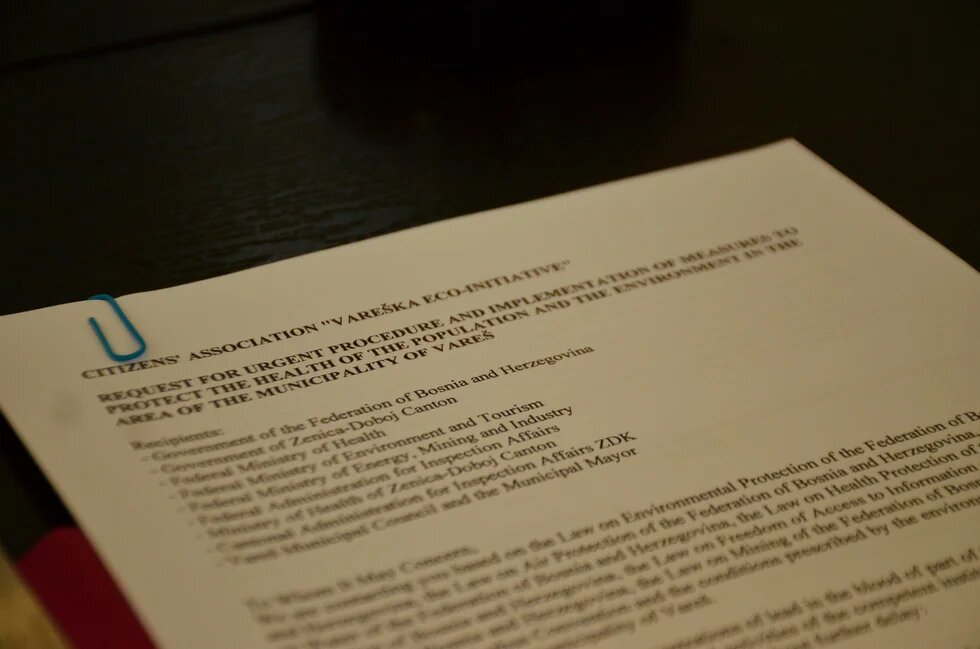
While discussions in most of the communities visited focused on planned exploration and future mining projects, in Vareš they also raised questions concerning the existing impacts of mining and public trust – or lack thereof – in institutions. Vareš therefore carried particular significance during the visit, as the discussion of mining was directly linked to questions of public health and residents’ quality of life. In conversations with residents of affected communities, concerns were raised about the potential consequences of pollution from the Rupice mine, including reports of elevated blood lead levels among residents, particularly vulnerable groups such as children, pregnant women, older people and people with pre-existing health conditions. Community representatives stressed the need for independent expert analyses, credible institutions and impartial environmental and health impact assessments, as well as a thorough investigation into potential sources of contamination and the establishment of systematic measures to prevent harm and protect public health.
The study visit focused not only on mining projects, but also on understanding the broader socio-political and environmental context in which they are being developed. Participants visited areas where, three decades after the war, communities have spent years trying to rebuild their lives, often relying on agriculture, forestry or sustainable tourism. For many residents, land is not merely an economic resource, but also the foundation of return, recovery and a sense of belonging.
This perspective added another dimension to discussions about extraction (or ‘digging’, as it is colloquially described). The prospect of losing agricultural land or access to drinking water carries particular weight in communities that have already experienced conflict, displacement and other major disruptions to their lives.
Meetings on Mount Ozren, Mount Majevica and at other locations also highlighted an often-overlooked dimension: protecting nature and communities can create opportunities for cooperation that transcend political and ethnic ‘boundaries’ in BiH. Local activists described how villages, communities, municipalities, organisations and people of different identities had come together around a shared goal: protecting rivers, mountains, forests and the conditions necessary for communities to thrive.
For many participants, the visit challenged assumptions about what ‘green’ or ‘responsible’ mining means in practice. Questions of environmental governance, consultation processes, institutional capacity and the rule of law arose repeatedly. Participants concluded that the sustainability of any mining project depends not only on technology or economics, but also on the strength and credibility of the systems and institutions responsible for overseeing its implementation.
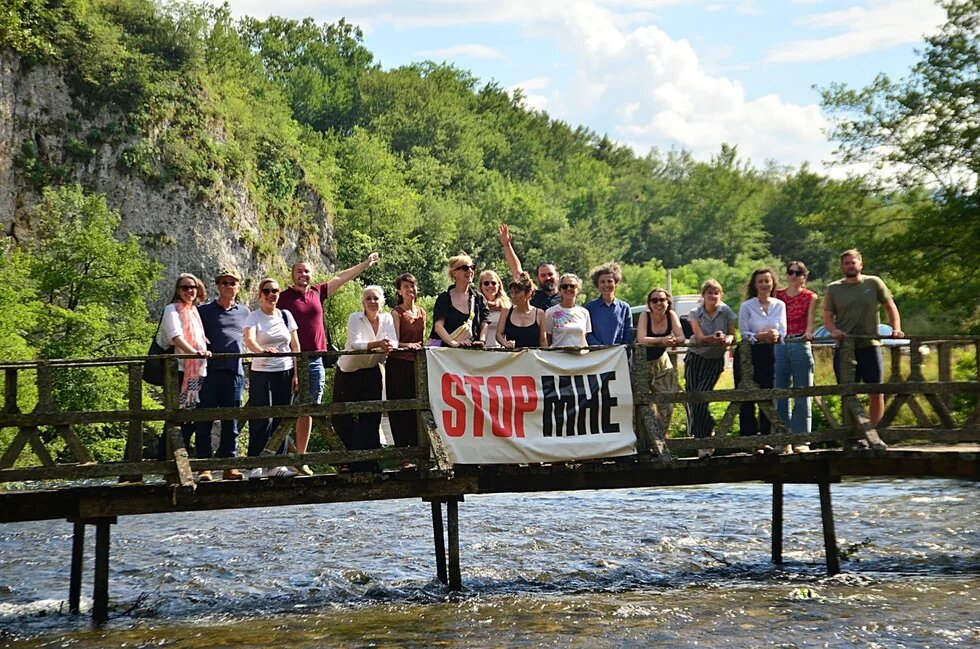
The visit also included meetings with the mayors of Lopare, Kupres and Vareš. Discussions addressed the proposed mining projects and the various expectations surrounding them, as well as unresolved questions concerning the environmental, social and development impacts of natural resource extraction. The study visit connected local experiences from Bosnia and Herzegovina with broader European debates. As the European Union seeks to secure the supply of critical raw materials needed for the energy transition, communities across the country are legitimately asking how the environment, human rights and democratic participation will be protected in the process.
Throughout the journey, local initiatives emphasised the importance of direct contact and conversations in the field. Instead of discussing mining solely from the perspective of policies or investments in closed meeting rooms, participants had an opportunity to experience the country’s natural wealth first-hand: to see its landscapes, drink water from its springs, sample local produce, meet residents and hear their concerns directly. Community representatives repeatedly stressed that decisions concerning natural resources must involve those whose lives will be most directly affected. Their message was clear: minerals may be critical, but the people, places and ecosystems connected to them are even more critical.
In the group reflection sessions, one thought stood out in particular: this debate is not only about the minerals and natural wealth beneath the ground. It is also about water, health, livelihoods, trust in institutions and the right of communities to participate meaningfully in decisions that shape their future and that of their children.
The study visit was intended precisely to create such a space for listening and exchanging experiences. By bringing together European stakeholders and local communities, it sought to deepen understanding, forge new connections and encourage a better-informed dialogue on mining, environmental protection and socio-environmental justice in Bosnia and Herzegovina.
In a country pursuing EU membership, where questions of development, democracy and environmental protection are becoming increasingly intertwined amid multiple transitions, one conclusion can be drawn: a just transition cannot mean merely replacing one form of extraction with another. It must be grounded in the protection of people and nature, respect for human rights, and the right of local communities to have an equal say in decisions about their own future.
______________
The initiatives, organisations and movements that the international group had the opportunity to meet were:
- Centre for Environment – Banja Luka
- Eko put Association – Bijeljina
- Guardians of Majevica Association – Lopare
- Vareš Environmental Initiative – Vareš
- Opstanak Association – Vareš
- Fojničani Association – Maglaj
- Ozrenski studenac Sočkovac Association – Petrovo
- Coalition for the Pliva – Guardians of the Pliva, Pliva Valley, We Will Not Give Up the Pliva and Janj – Šipovo, Mrkonjić Grad, Jezero
- Aarhus Resource Centre in BiH Association – Tuzla/Sarajevo
- Youth for Kupres Initiative – Kupres